
Introducing Noah Cramer - Class of 2026
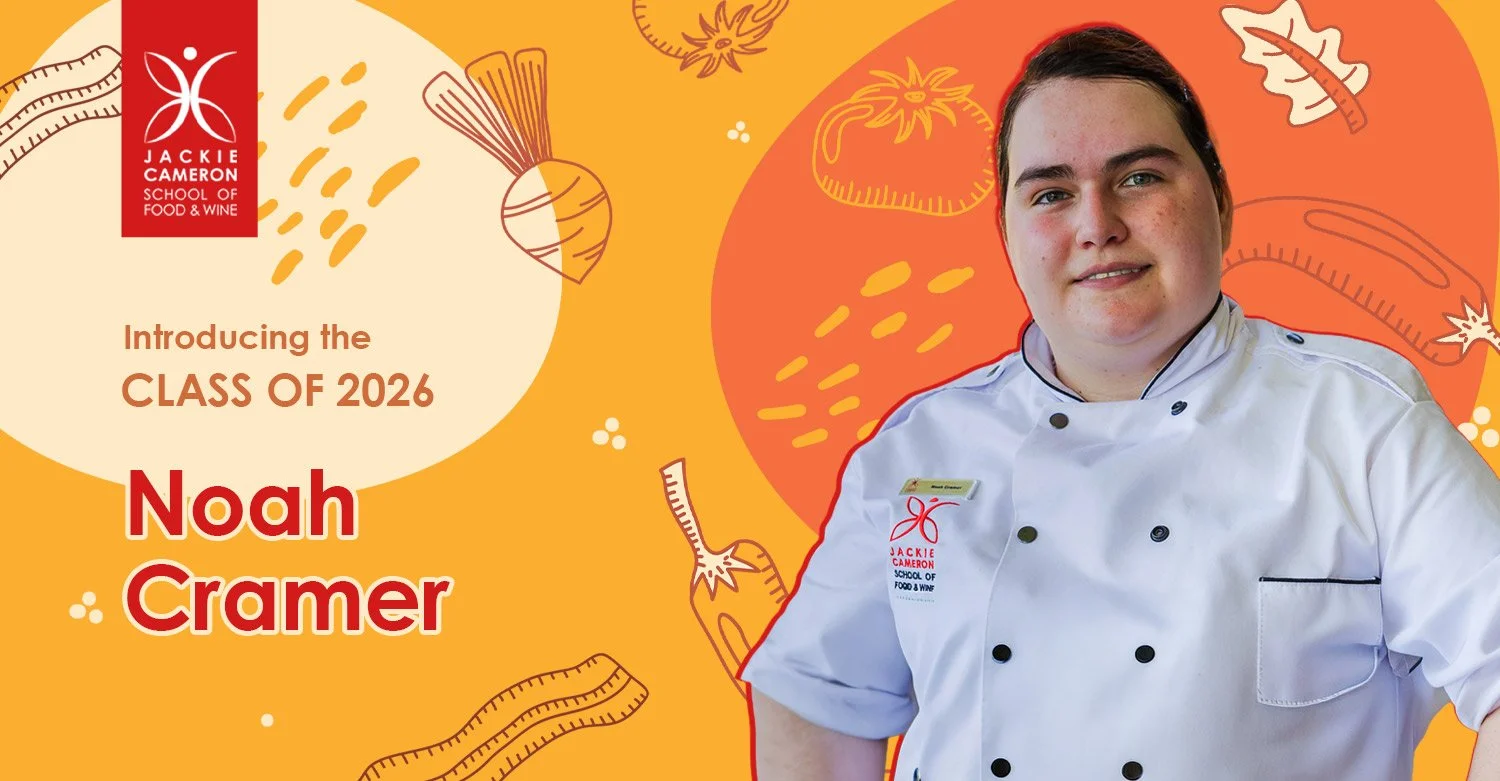
Noah Cramer / Photo: Kathy Pitout Photography
Meet Noah Cramer – Future Chef in the Making at Jackie Cameron School of Food & Wine
At the Jackie Cameron School of Food & Wine in Hilton, KwaZulu-Natal Midlands, every student arrives with a unique story and a personal culinary dream. Some are drawn to the precision of pastry, others to the excitement of restaurant service. For Noah Cramer, the journey into the professional kitchen began long before culinary school with simple baked treats shared with family and friends.
Growing up in KwaZulu-Natal, Noah developed a natural love for working with his hands and experimenting in the kitchen. That early curiosity has now grown into a clear goal: building the knowledge, confidence, and discipline needed to pursue a future in the culinary industry; and one day open a bakery and café in the countryside.
In this student chef Q&A, Noah shares his inspirations, ambitions, and what it takes to commit to the demanding but rewarding path of professional chef training.
Q&A with Student Chef Noah Cramer
1. What Inspired you to enrol at Jackie Cameron School of Food & Wine?
Ever since I was young, I have enjoyed being in the kitchen. I’ve always enjoyed making small baked goodies for friends and family. I also enjoy working with my hands, so being at Jackie Cameron School of Food & Wine and learning to work and maneuver in the kitchen was the best option for me… especially since I was set on never going to college or university.
2. What are you hoping to achieve here?
I want to learn. While I do know how to move and work in a kitchen, I can always learn more and develop my knowledge. I also want to be able to make pastries and cakes without needing to constantly look at recipes and methods.
3. Explain what you are prepared to give of yourself.
I know that working in the culinary industry is hard and can be unforgiving, but I am fully prepared to give it my all. I am prepared to reschedule personal events so that I can help at functions (if it is an occasion I can reschedule).
4. What is your long-term goal?
To open a small bakery and cafe in a mountainous area.
5. In how many years do you hope to achieve this?
I am hoping that two or three years after graduating, I will have started my own business and then I plan to slowly work my way to having a bakery/cafe in the countryside.
6. Are you aware that the pressure you'll be placed under during the course will help you to achieve your goal? Elaborate on your ability to cope with pressure.
I honestly don't do well under pressure, especially if it is to please someone or uphold their expectations. But I am set on overcoming this and doing my absolute best to achieve my goals.
7. Do you shy away from hard work? Elaborate on your answer.
I do find myself shying away from harder tasks, especially ones that require physical labour. Often, this is because I dislike the feeling of sweating, but I know that I am required to do hard physical tasks and I am fully willing to put aside my discomfort.
8. Are you willing to perform all tasks assigned to you? Give a reason for your answer.
Yes, I know that I am required to do the tasks given to me and I am willing to do these tasks.
9. Are you aware that the hospitality industry requires you to work on weekends and public holidays while guests ‘play’? Comment on this.
While I am not too happy about the idea of having to give up weekends and public holidays, it is what is required within this industry. While working during weekends and public holidays will happen, I don't find cooking and creating food as work, so I won’t mind.
10. Who is your favourite international foodie?
None. I watch many baking videos, but none really have any sort of 'foodies' in them, so I am not familiar with names of 'foodies'.
11. If food had a personality what dish would be most like you - and why?
A dark chocolate mousse with a mango sorbet. I am often shy and so I am hard to get to know. I also have issues with making people uncomfortable at times, so like dark chocolate I am not for everyone. I often have issues with people, but I can get comfortable with people like me. Think… dark chocolate is too bitter for people - but once you get to the mango sorbet it is sweet.
12. Where were you born and raised?
I have always lived in KwaZulu-Natal. While I’ve never left this province, I have moved a few times. For the last few years, I have lived in Hilton.
13. Apart from food, what hobbies do you enjoy?
I enjoy art and writing. I am currently working on drawing some horror comics.
14. What dish do you find least inspiring? Explain your reason.
Salads. They are boring, even when made with fancy ingredients.
15. Name four celebrities you'd like to have at your dinner table. Explain why.
I can only name three;
Hugh Jackman. He is one of my favourite actors and it would be a pleasure to meet him.
Robert Downey Jr. He, also, is an actor who I have always admired, and I would enjoy meeting him.
Johnny Depp. He is an actor that I grew up watching.
Why Study to Become a Chef in Hilton, KwaZulu-Natal Midlands?
For aspiring chefs like Noah, professional training provides far more than recipes. It builds the discipline, technical skill, and resilience required to succeed in the hospitality industry.
At the Jackie Cameron School of Food & Wine, students train in a real professional kitchen environment, gaining hands-on experience in classical cooking techniques, pastry work, plating, service, and event preparation.
The program focuses on preparing graduates for the realities of the industry:
Time management under pressure
Menu planning and food presentation
Hospitality and guest experience
Real-world event and restaurant service
Many graduates go on to work in restaurants, hotels, private catering, and international hospitality roles. Others, like Noah hopes to do, pursue entrepreneurial paths by opening their own bakeries, cafés, or food businesses.
If you dream of turning your passion for food into a career, a professional chef qualification can provide the foundation to make it happen.
FREQUENTY ASKED QUESTIONS
What qualifications do you need to become a chef in South Africa?
Most professional chefs begin with formal culinary training at a recognised chef school where they learn kitchen skills, food safety, menu planning, and hospitality service.
How long does chef training take?
Chef training programmes typically range from one to three years depending on the course structure and practical training requirements.
Is culinary school difficult?
Professional chef training is demanding. Students learn to work under pressure, manage time effectively, and perform consistently in a busy kitchen environment.
Can you start your own bakery after chef school?
Yes. Many chefs pursue entrepreneurial paths after gaining experience in the industry. Culinary training provides the technical foundation needed to open bakeries, cafés, catering companies, or restaurants.
Do chef schools teach baking and pastry skills?
Yes. Professional culinary programmes usually include pastry and baking modules, teaching students how to produce breads, pastries, cakes, and desserts.
Interested in becoming a chef?
Discover how the Jackie Cameron School of Food & Wine can help you build the skills, confidence, and experience needed to succeed in the culinary world. Your journey with food starts here.