Career Opportunities for Culinary School Graduates
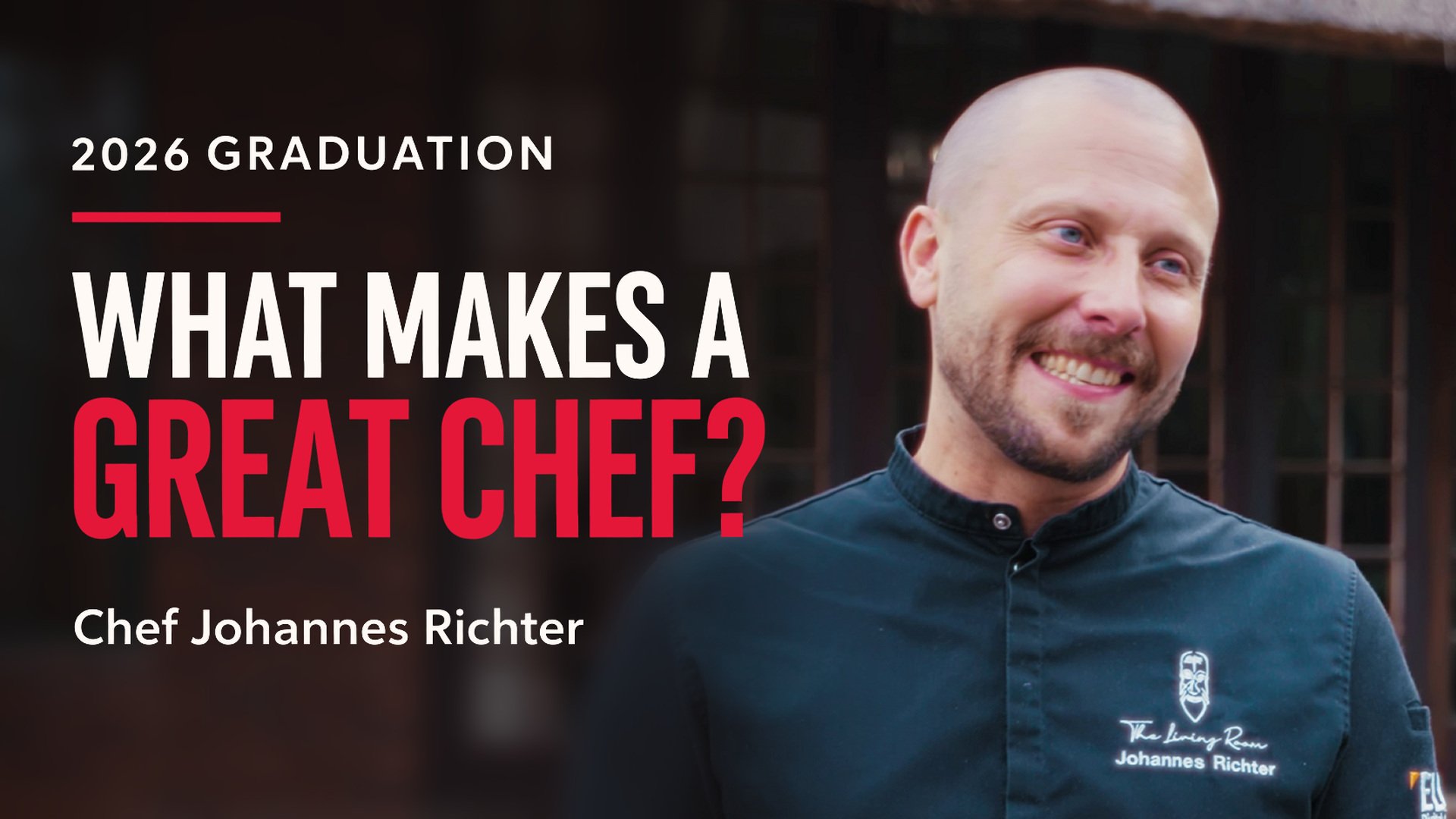
Chef Johannes Richter speaks at JC Graduation 2026 at Jackie Cameron School of Food & Wine
It is important to note that all graduates of Jackie Cameron School of Food & Wine are industry ready.
How culinary training prepares you for work
The 18-month culinary course focuses on practical skills, in-depth culinary techniques, hygiene, kitchen safety and real-world kitchen experience. Graduates leave with a strong foundation of core competencies and are equipped to enter the industry immediately.
Being industry ready after the 18-month course means that students who choose to continue with the three-year programme already have the culinary competence required. The additional training provides more in-depth instruction in hygiene and kitchen safety, while the extended period also gives students more time to gain valuable industry experience. They also write a national trade test.
Career options for culinary graduates
While the obvious career paths for culinary graduates include working as chefs and in professional kitchens, there are many alternative opportunities to consider, including:
- Food styling for photographs and videos
- Culinary consulting
- Management and leadership roles
- Culinary instruction
- Food consulting and menu development
- Food writing and blogging
- Recipe development
- Television and video food presentation
What employers look for
Catering companies and event kitchens often employ graduates with shorter formal training because they value practical, hands-on ability and industry readiness. Other employers may view longer training as an indication of deeper commitment and preparation for more complex kitchen roles, including management.
The three-year course requires a greater investment of both time and money, but the additional training and industry experience can pay dividends through broader employment opportunities and greater career progression.
Ultimately, hands-on ability matters. Employers want graduates who can perform effectively under pressure, understand food safety, demonstrate sound culinary skills and conduct themselves professionally.
Choosing a training route
Students at this KwaZulu-Natal Midlands school have the advantage of beginning with the 18-month course and, if they wish to further their education and career prospects, continuing with the three-year option. The school also welcomes graduates from other culinary institutions who wish to undertake the additional 18 months of training.
See what to expect from a professional culinary course or compare the 18-month and three-year culinary courses.
“Stars do not pull each other down to be more visible; they shine brighter.”
Considering chef training? Talk to us about the course that suits your goals.
Frequently Asked Questions
What jobs can you do after culinary school?
Culinary graduates can pursue chef roles in professional kitchens, including catering and event kitchens. Other career paths include food styling, recipe development, menu consulting, culinary instruction and food media.
Can I start working after an 18-month culinary course?
Yes. The 18-month course at Jackie Cameron School of Food & Wine prepares graduates to enter the industry through practical training in culinary techniques, hygiene and kitchen safety, with experience in professional kitchens.
What does the three-year culinary programme add?
It builds on the first 18 months with more in-depth training in hygiene and kitchen safety, additional industry experience and a national trade test. The extended route can help students prepare for roles with more responsibility.
Can I start with 18 months and decide later whether to continue?
Yes. At Jackie Cameron School of Food & Wine, students can start with the 18-month course and choose to continue with the three-year programme.
Can graduates from other culinary schools take the additional 18 months of training?
Yes. Jackie Cameron School of Food & Wine welcomes graduates from other culinary institutions who wish to undertake the additional 18 months of training.
What practical skills do culinary employers look for?
Employers value sound culinary technique, an understanding of food safety, professionalism and the ability to work effectively under pressure.